
Pilot Aptitude & Psychometric Tests
Last update: 28/12/2025
Master Your Pilot Aptitude & Psychometric Tests
Ace the pilot aptitude tests required by major airlines. Our complete guide is designed to prepare you for the critical psychometric and cognitive assessments used in the modern airline pilot selection process. We break down every common component, from pilot math tests and spatial orientation to multitasking and logical reasoning.
These assessments are used worldwide to evaluate the core skills and abilities essential for a successful career in the cockpit. Each test is strictly timed, demanding both speed and accuracy.
Below, you’ll find a detailed breakdown of each common test type. We provide clear explanations of the format, number of questions, and specific time limits to help you practice effectively and approach your airline pilot assessment with confidence.
Pilot Mathematics Test (Numerical Reasoning)
The Mathematics test is a critical component of any pilot assessment, evaluating your numerical reasoning and mental arithmetic skills. You will face questions on speed, distance, time calculations, fuel consumption, and currency conversions, all without a calculator. These skills are essential for flight planning, navigation, and making quick, accurate decisions under pressure in the cockpit.
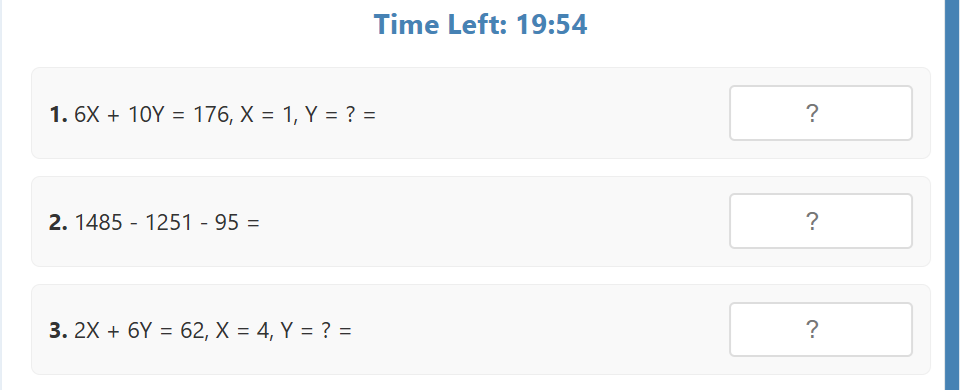
The duration of the test is 20 minutes.
Physics Fundamentals (Technical Comprehension)
This test assesses your foundational technical comprehension and knowledge of basic physics. You will be presented with high-school level multiple-choice questions focusing on mechanics, electricity, and thermodynamics. This knowledge is crucial for a pilot as it forms the basis for understanding all key aircraft systems, from aerodynamics and the principles of flight (mechanics) to engine operation (thermodynamics) and avionics (electricity). Airlines use this to gauge your capacity to learn and master the technical aspects of flight training.
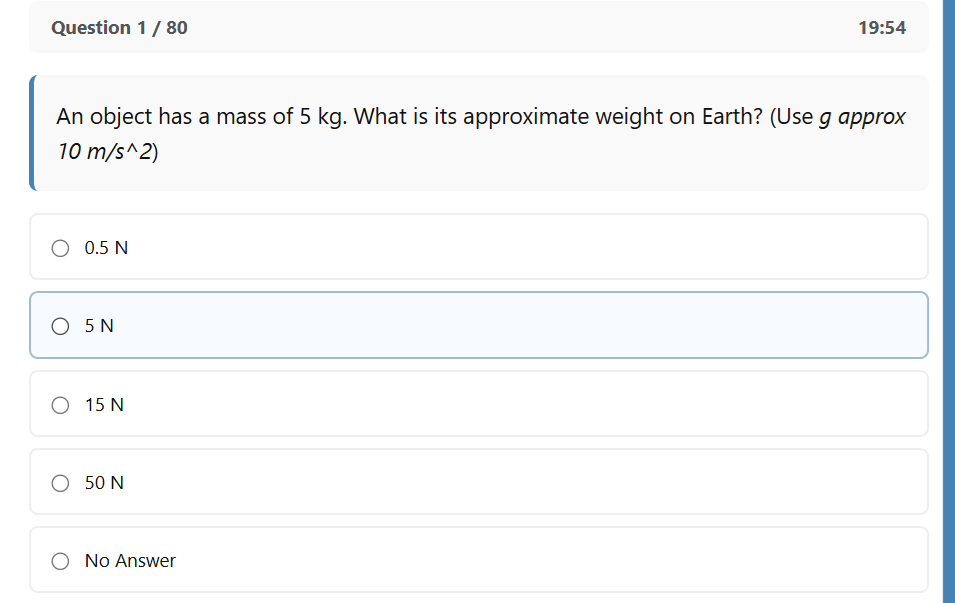
The duration of the test is 20 minutes.
Short-Term Memory Test
This assessment measures your capacity to absorb, retain, and recall information over a short period. You will typically be shown a sequence of data, such as call signs, altitudes, or headings, and must recall it accurately after a brief delay. Strong short-term memory is vital for pilots who must manage and act upon a constant flow of new information from air traffic control (ATC) and flight instruments.
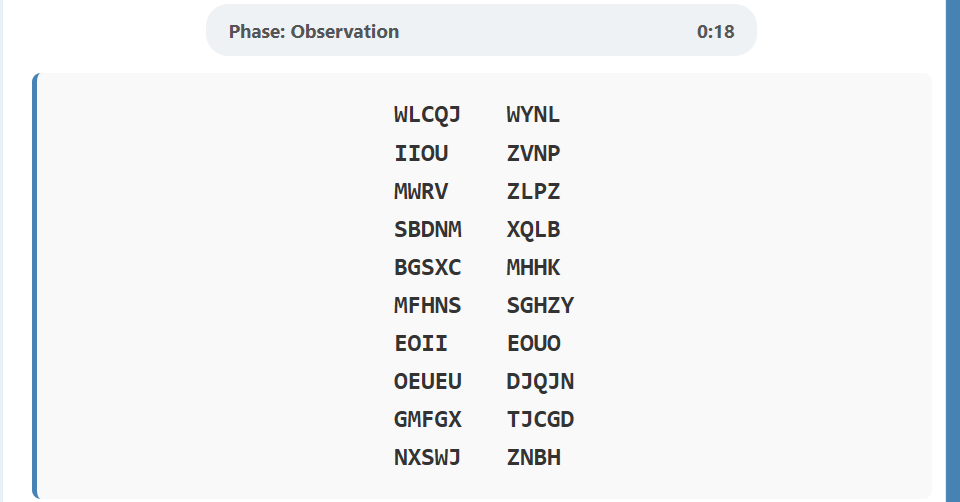
The duration of the test is 6 minutes.
Dice Test (Spatial Orientation & Visualisation)
The Dice test, a common form of spatial orientation assessment, measures your ability to mentally rotate 3D objects. You’ll be shown one or more dice and asked to determine the symbol on an unseen face. This skill is directly related to a pilot’s ability to maintain spatial awareness, manage the aircraft’s attitude, and navigate in a three-dimensional environment.
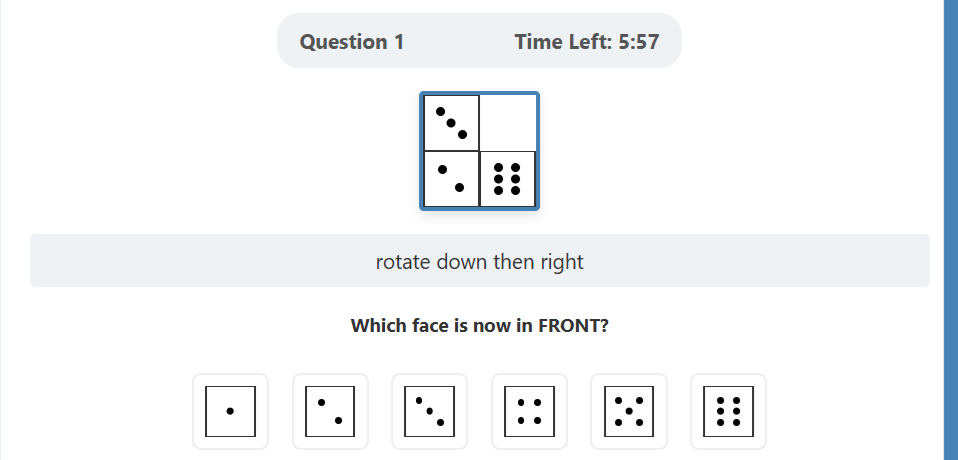
The duration of the test is 6 minutes.
Matrix Test (Abstract & Logical Reasoning)
The Matrix test evaluates your abstract reasoning and pattern recognition skills. You will be presented with a grid of symbols or shapes with one piece missing. Your task is to identify the underlying logical rule of the pattern and select the correct missing item. Airlines use this to gauge your problem-solving abilities and your capacity to understand complex systems, which is crucial for troubleshooting and systems management.
The duration of the test is 6 minutes.
Number Sequence Test (Logical Deduction)
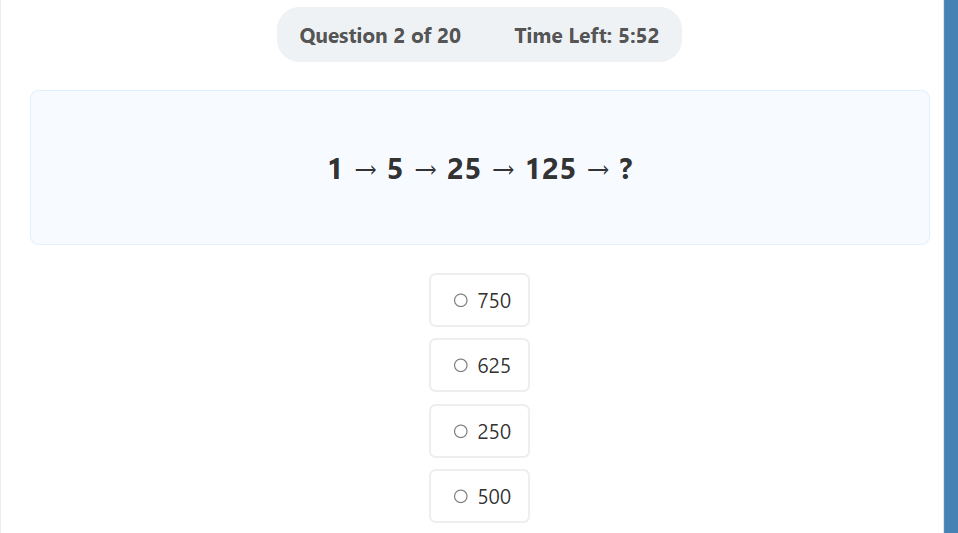
This test assesses your logical deduction and numerical reasoning. You will be given a sequence of numbers and must find the logical rule governing them to determine the next number in the series. This ability to identify patterns and extrapolate data is key for pilots in monitoring flight parameters, anticipating trends, and ensuring system performance.

The duration of the test is 6 minutes.
Data Interpretation Test (Charts & Graphs)
This test measures your ability to quickly and accurately read, understand, and interpret complex data presented in charts, graphs, and tables. You will be asked questions based on information about energy sources or other technical data. For pilots, this skill is essential for reading flight manuals, performance charts, and interpreting instrument displays.
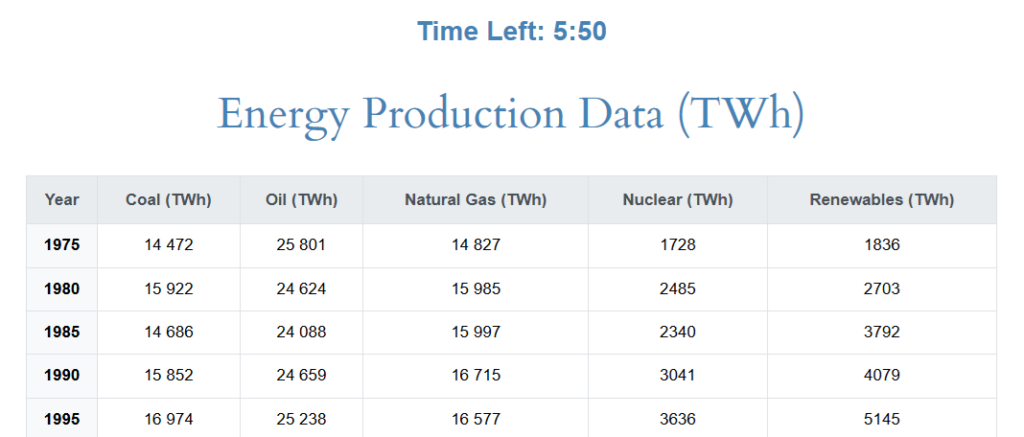
The duration of the test is 6 minutes.
Word-Number Transformation (Rule-Based Processing)
This test evaluates your ability to quickly understand, remember, and apply a complex set of changing rules. You must correctly transform a word into a number sequence based on the given instructions, which may change from one question to the next. This skill is vital for pilots, who must meticulously follow standard operating procedures (SOPs), checklists, and ATC instructions, and adapt instantly when those instructions or conditions change.
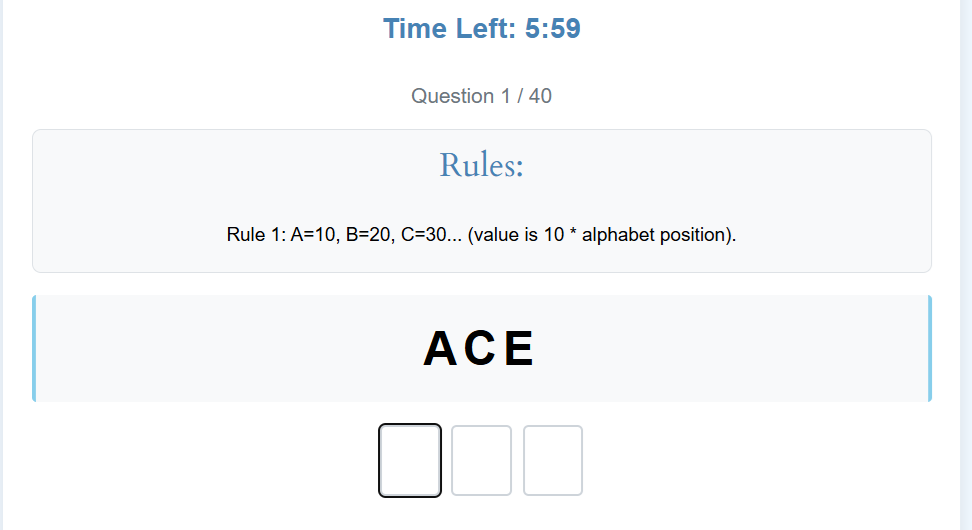
The duration of the test is 6 minutes.
Equal Objects (Visual Comparison)
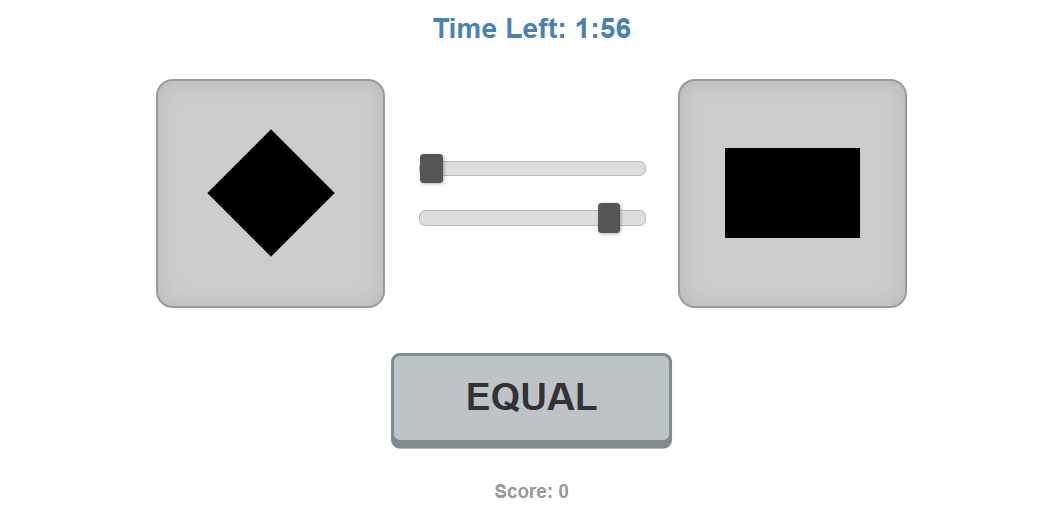
This test evaluates your rapid decision-making and ability to filter out visual distractions. You will be presented with two objects and must instantly decide if they are identical while ignoring moving sliders designed to break your focus. This skill simulates the pilot’s need to cross-check instruments (such as verifying that the Captain’s and First Officer’s displays match) and detect discrepancies immediately in a dynamic, high-workload environment.
The duration of the test is 6 minutes.
Grid Shapes (Spatial Logic & Reasoning)
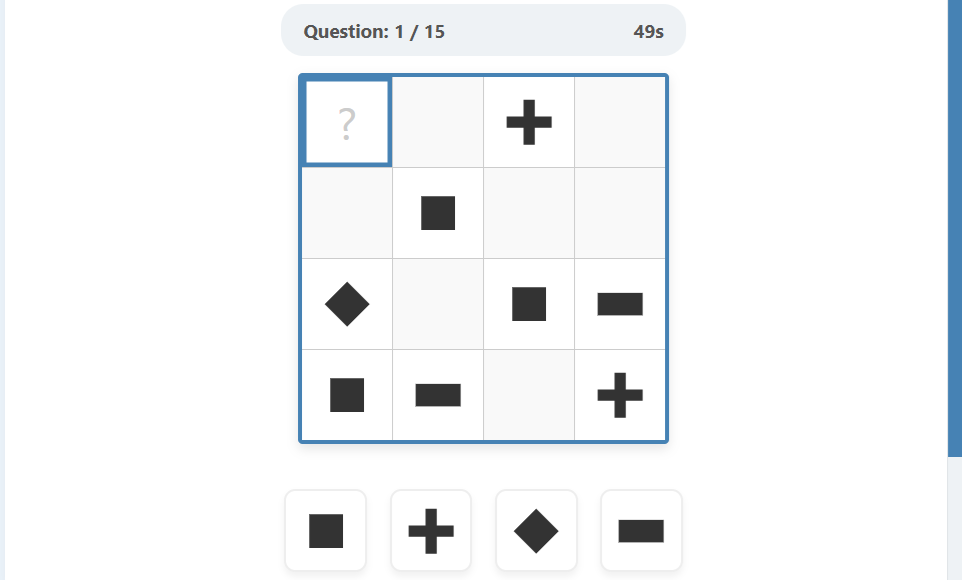
This assessment evaluates your deductive reasoning and spatial visualization skills through the lens of a Latin Square puzzle. You must analyze a 4×4 grid and determine the single missing shape in a target cell, ensuring that each unique symbol (Square, Cross, Diamond, Rectangle) appears exactly once in every row and column. This test simulates the complex cross-referencing and logical deduction required when verifying navigation data or coordinating multiple system readings simultaneously.
The duration of the test is 15 minutes.
Flight Control Test (Coordination & Psychomotor Skills)
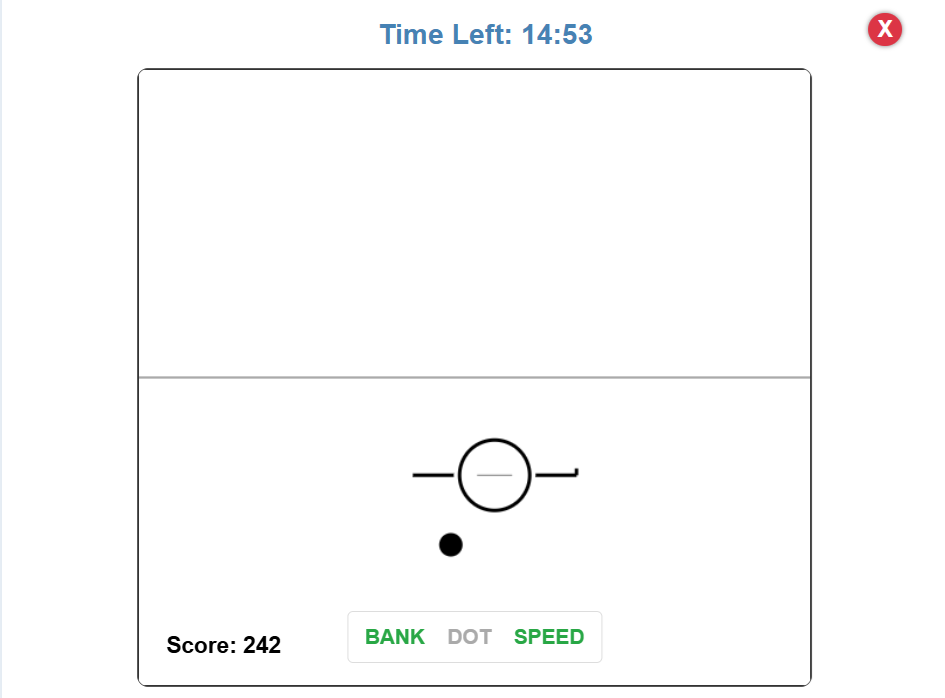
This module is a direct assessment of your hand-eye coordination and multitasking abilities, often called a “psychomotor test.” You are required to use controls (like a joystick or mouse) to keep a target centered on a screen, often while performing secondary tasks. This simulates the core pilot skill of “flying the aircraft” while managing other systems.
The duration of the test is 15 minutes.
Multitasking – Boxes (Divided Attention)
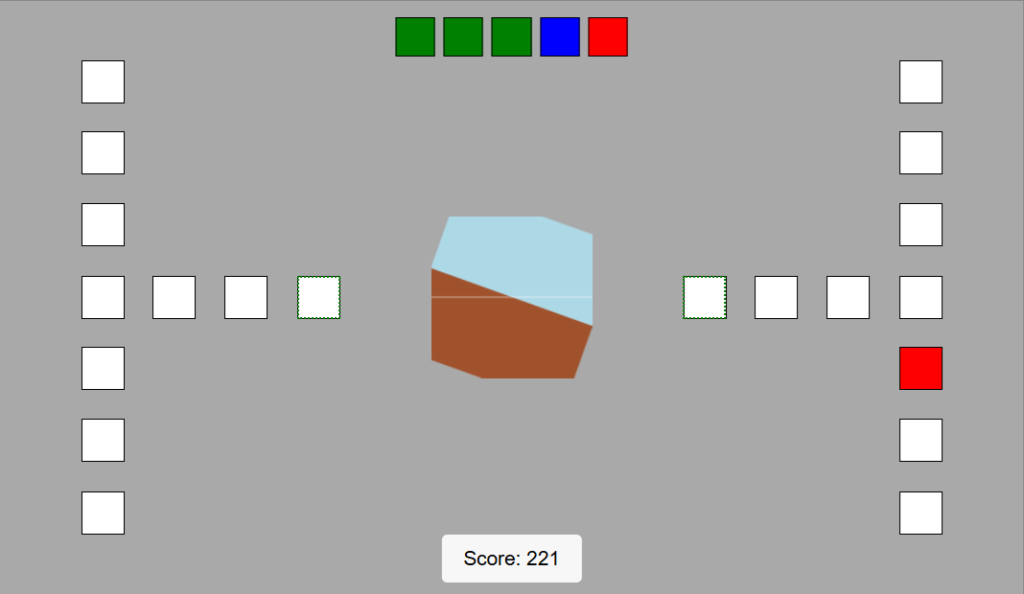
This complex, 4-in-1 test is a powerful assessment of your divided attention and workload management. You must simultaneously juggle four tasks: a psychomotor tracking task, a visual pattern recognition task, an auditory processing task, and a reaction-based timing task. This test is designed to simulate the high-load environment of a modern cockpit, where pilots must fly the aircraft, monitor systems, listen to ATC, and react to alerts all at once.
The duration of the test is 15 minutes.
Multitasking – ATC (Task Switching)
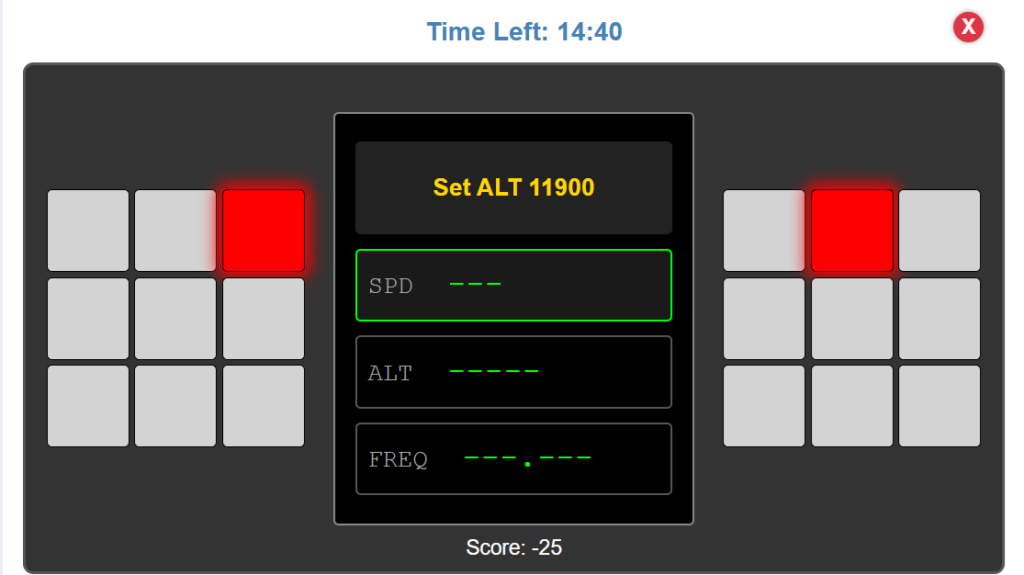
The “ATC” multitasking test measures your ability to divide your attention and switch between two different cognitive tasks effectively. You will be required to manage a primary data-entry task (entering PFD data) while simultaneously monitoring and reacting to a secondary visual task (clearing red boxes). This directly simulates a pilot’s workflow, such as inputting data into the FMS (Flight Management System) while maintaining situational awareness and monitoring other instruments.
The duration of the test is 15 minutes.
Synonyms Test (Verbal Reasoning)
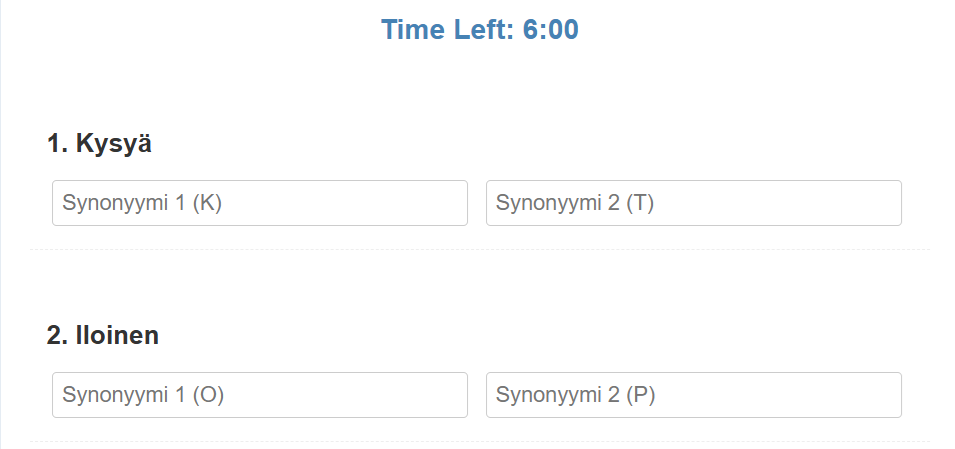
The Synonyms test is a part of the verbal reasoning assessment, evaluating the breadth of your vocabulary and your understanding of the language. You must select the word that has the closest meaning to the given word. A strong command of language is mandatory in aviation for clear and unambiguous communication with ATC and crew members.
The duration of the test is 6 minutes.
Odd Word Out Test (Verbal Classification)
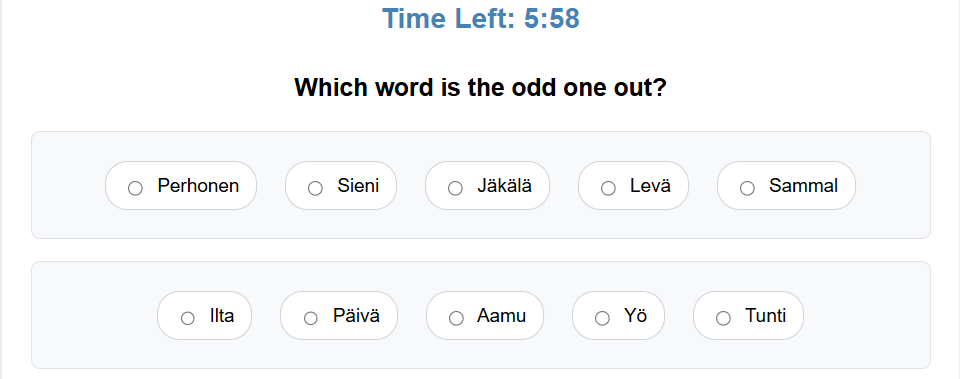
This test measures your verbal reasoning and classification skills. You will be given a group of words and must identify the “odd one out” that does not logically belong with the others. This assesses your ability to understand relationships and categories, a form of logical thinking important for clear communication and decision-making.
The duration of the test is 6 minutes.
Compound Words Test (Language Proficiency)
This assessment tests your familiarity with the structure and vocabulary of the language. You will typically be asked to form or identify correct compound words. Like other verbal tests, this ensures you meet the high standard of language proficiency required to understand technical manuals and communicate effectively in an aviation environment.

The duration of the test is 6 minutes.
Syllogisms Test (Deductive Reasoning)
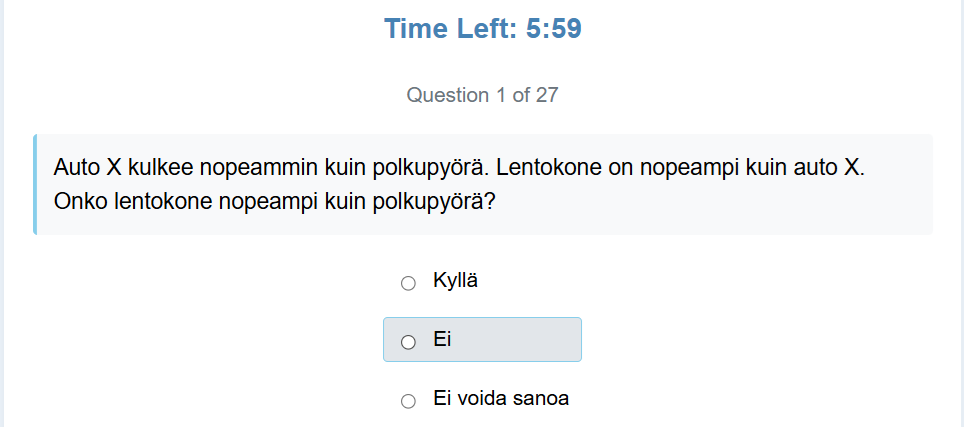
Syllogisms are a classic test of deductive reasoning. You will be given two or more premises (statements) and must decide if a given conclusion logically follows from them, regardless of whether the statements are true in the real world. This tests your pure logical processing, a key skill for pilots who must make sound decisions based on the information available.
The duration of the test is 6 minutes.
Physics and Logic Test (Technical Comprehension)
This test assesses your foundational knowledge of basic physics principles (such as mechanics, forces, and electrics) and your logical aptitude. Questions often present a mechanical or physical scenario and ask you to predict the outcome. This technical comprehension is fundamental for understanding aircraft systems, aerodynamics, and the principles of flight.
The duration of the test is 6 minutes.
E with three dots (Perceptual Speed & Attention)
This assessment evaluates your perceptual speed, selective attention, and rapid decision-making capabilities. You must quickly determine if a displayed symbol matches a strict target rule (an upright ‘E’ with exactly three dots) while filtering out similar distractors. This skill is essential for pilots, who must constantly scan complex instrument panels to instantly recognize specific status readings, alerts, or anomalies amidst visual clutter.
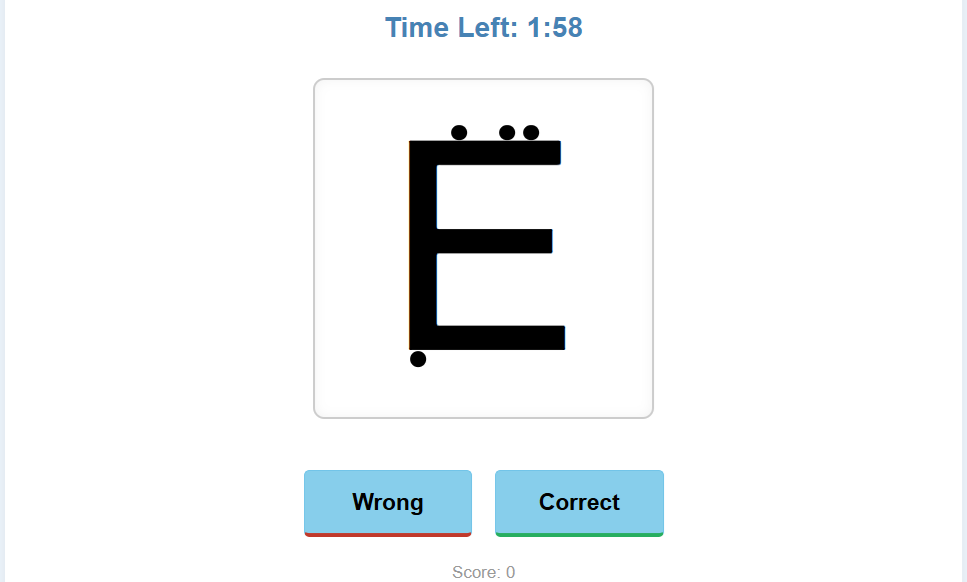
The duration of the test is 2 minutes
Diamond Series (Inductive Logical Thinking)
This test evaluates your ability to discover rules and interrelationships from abstract data. You will be presented with two categories of tables (“Blue” and “Orange”), each defined by a specific logical rule. Your task is to analyze the examples, deduce the underlying rule, and correctly assign new tables to the appropriate category. This simulates the pilot’s need to identify patterns in system behavior and apply standard operating procedures to new situations.
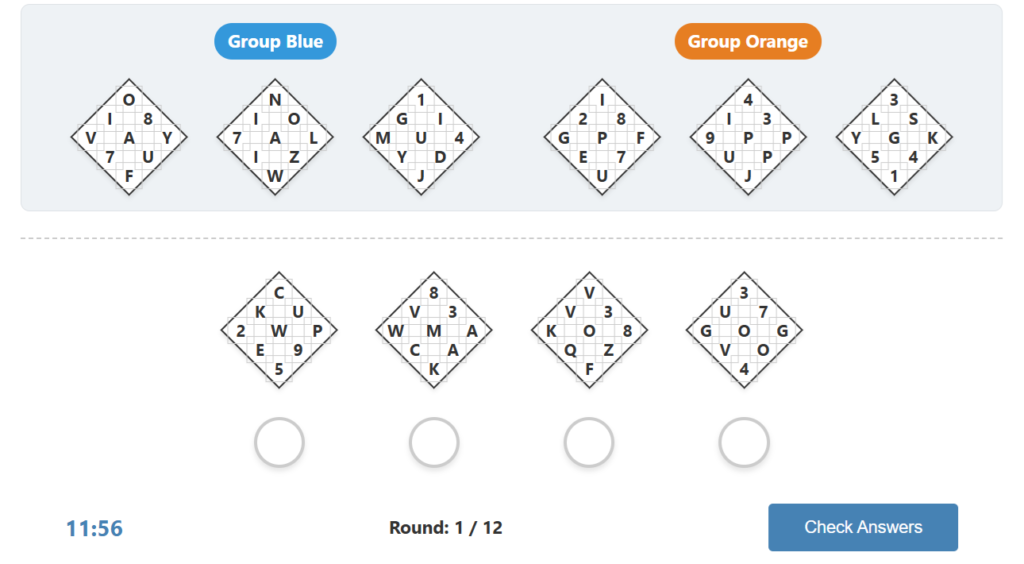
The duration of the test is 6 minutes.